Wednesday, 10 May 2017

(I) On how a snakebite will change your life...

One of the things that are difficult to find related to snakebites is papers on how they affect the life of people. How this stressful situation is reflected, mostly at psychological and economical level. Some studies say that many patients suffer from Post Traumatic Stress disorder or depression after a snakebite. 

I'm starting to see snakebites as divided into three parts: 
  1. The first part is THE ACCIDENT ITSELF, and this must be approached with preventive measures basically, awareness campaigns like for car accidents or labor accidents. To be aware, do not drink alcohol, use some protection... There is no much done on job security and even car security is still very precarious. In some cases, appropriate laws and application of this legal measures eventually will be needed. Prevention is better than cure. Better safe than sorry.
  2. Second part is immediately AFTER THE ACCIDENT, and here is were all the diagnostic, therapeutic, research and others play a role.
  3. MEDIUM, LONG TERM CONSEQUENCES of the accident for the individual and the society.
There is plenty of literature on the second topic but very few on the first (awareness, prevention) and even less on the third (human impact of the bites).
Let's see what i there on the "cosmonet"!


This is a beautiful and rigorous study on the socio-economic impact of snakebites on the Rural population of Tamil Nadu, India. I will present a summary of the full article.

This is a PLOS article (open-access article). Please refer always to the original.

Snakebite and its Socio-Economic Impact on the Rural Population of Tamil Nadu, India.


Valyapuri S, Valyapuri R, Ashokan R, Ramasamy K, Nattamalsundar K et al.
University of Reading, United Kingdom / Karpagam University, Coimbatore, Tamil Nadu, India.
November 2013 / vol 8 / Issue 11 / e80090
http://journals.plos.org/plosone/article?id=10.1371/journal.pone.0080090


Abstract
Background: Snakebite represents a significant health issue worldwide, affecting several million people each year with as many as 95,000 deaths. India is considered to be the country most affected, but much remains unknown about snakebite incidence in this country, its socio-economic impact and how snakebite management could be improved.

Methods/Principal Findings: 
We conducted a study within rural villages in Tamil Nadu, India, which combines a household survey (28,494 people) of snakebite incidence with a more detailed survey of victims in order to understand the health and socio-economic effects of the bite, the treatments obtained and their views about future improvements. Our survey suggests that snakebite incidence is higher than previously reported. 3.9% of those surveyed had suffered from snakebite and the number of deaths corresponds to 0.45% of the population. The socio-economic impact of this is very considerable in terms of the treatment costs and the long-term effects on the health and ability of survivors to work. To reduce this, the victims recommended improvements to the accessibility and affordability of antivenom treatment.
Conclusions: Snakebite has a considerable and disproportionate impact on rural populations, particularly in South Asia. This study provides an incentive for researchers and the public to work together to reduce the incidence and improve the outcomes for snake bite victims and their families. 

INTRODUCTION:
The objective of this study was to obtain a more complete understanding of the incidence and effects of snakebites among the rural population of India and in particular to obtain the snakebite incidence rate in three different sizes of rural villages, prevalence rate in male and female populations and socio-economic impact of snakebites on rural population.

METHODS:
The study was conducted following ethical guidelines. Permission for the study were obtained from village and Panchayat leaders. The aims of the research were explaines to the participants in local languages and informed written consent was obtained from all study
participants. All data were anonymized prior to analysis. 

HOUSEHOLD SURVEY:

Villages were divided into three categories based on the number of households (2001 census Tamil Nadu). Type I less than 100 houses, type II between 100 and 250 and type III more than 250 houses. 
Ten villages from each of the three categories were randomly selected. The sample size is statistically meaningful and representative of the different geographical regions of Tamil Nadu. 
Village life in Tamil Nadu

Households surveys were conducted from every house in each sampled village, a total of 7,578 households representing 28,494 people. 
Every snakebite incidence that occurred in the last 10 years was registered and verified.
A detailed questionnaire (Study material S1, translated into Tamil*) was devised to ask victims about the circumstances of the snakebite, treatments and socio-economic impact direct and indirect for the victim and his/her family. The information was collected by face to face interviews. 
Answers were collected from 93 victims and 12 relatives of victims who had died following the snakebite. Between these 105 people this accounted for 129 bites. 
Exhaustive statistical analysis was done. 

RESULTS:
Household survey: A total of 7578 households representing 28,494 people were survey (621 from type I villages, 1871 from type II and 5086 from type III). 
  • 88.9% were involved in agriculture
  • Total number of snakebites 1409. 1115 people (3.9% of the sample) had been bitten by a snake and 20% of these more than once. People living in small (type I) villages were more likely to suffer from snakebites.
  • Rate higher in men than women
  • 9% (127 people) of the total bites resulted in death (0.45% of the total population surveyed).
  • The year-to-year variation correlated with the annual rainfall. More bites and deaths were recorded in years with higher rainfall. 
  • More precise data on the year the study was conducted show highest number of incidents between September and November, high incidents between April and June and low between December and March, correlating with the rainfall pattern as well as the agricultural activities. During wet months, more snakes may also enter into living areas to capture prey resulting in greater number of bites.
  • Economically active age groups (between 11 and 50) had higher number of bites with higher risk between 40 and 50).
  • In 77% of cases the snake was identified by the victim or the family. Of these, 79.4% were due to venomous snakes, all of which from the Big Four group, with Russell's viper and cobra being the most frequent cause of bites. Identification was not possible during night time.


DETAILED SURVEY OF SNAKEBITE VICTIMS
129 snakebite victims or their relatives answered a more detailed questionnaire which investigated the circumstances of the snakebite incidents, the treatments obtained, and their views about future improvement in treatment provision. In 12 of the cases the victim had died following the bite. 

  • 79% occurred when the victims were in the fields
  • 15% of the bites occurred indoors
  • 72% during working time 
  • 19% walking along main roads to villages or agricultural land
  • More frequent one peak in the morning and one late afternoon.
  • 82% on parts of the legs
  • 16% on parts of the arm. 
  • 20% the snake was killed and 14% of victims took the snake to hospital for identification.
  • Most frequent symptoms after snakebite were pain at the bite site, bleeding, giddiness, vomiting, sweating or unconsciousness and paralysis. 
  • 64,3% of the victims did not received first aid immediately after the bite. Where first aid was provided (98% by untrained individuals) the most common treatment was a tourniquet, applied with or without incision of the wound. Other measures were application of plants (Calotropis gigantea) , blood sucking, application of calcium carbonate. Some victims were advised to carry heavy weights or forced to vomit.  
  • 67% of victims went to hospital, 17% obtained traditional treatments and 10% had both. In hospital, 70% received snake antivenom (ASV)


HOW TREATMENT FOLLOWING SNAKEBITE COULD BE IMPROVED:
When the victims were asked for their views on how treatment following snakebite could be improved, most of the victims or their relatives considered that
  • Health care facilities equipped with ASV should be available in each village or, failing that, a vehicle available in each village to take snakebite victims to hospital. The primary health centers available in some of the villages did not hold any ASV.
  • Most of the victims or relative would be willing to go to hospital instead of traditional healers if hospital treatments were easily available.
  • ASV is available free of charge in government hospitals, but the majority of victims suggested that snakebite should be treated free of charge even in private hospitals. 
  • Victims also suggested that increased knowledge among the general public about the correct first aid for snakebites and how to handle bites from non-venoumous snakes would be a priority.
www.indiansnakes.org

SOCIO-ECONOMIC IMPACTS CAUSED BY SNAKEBITES
The major impact caused by snakebites was the financial burden to the family. 
The direct cost (transport and medical expenses) to the victims of treating the snakebite varied considerably, from as little as zero (16.3% of victims) to a maximum of Rs 350,000. 
The cost of treatment was increased dramatically in private hospitals due to the severity of the bites and the need for emergency medical equipment such as ventilator. 
75% of the victims that obtained hospital treatment attended only private hospitals and paid the treatment cost themselves.
Delay in treatment may be due to having first sought treatments by traditional healers, or their village primary health centre prior to referral to the nearest town hospital, and the further referred to district government hospital. In some cases they had travelled further to private hospital.

None of the 108 victims who paid for their treatment were covered by medical insurance. 
  • Over 40% of victims required to take a loan to pay for the treatment. The financial implications of snakebites were exacerbated by a lack of availability of loans for medical and associated expenses by the nationalized banks. 
  • In order to repay the loan, the families often had to sell their valuables.
  • The victims who paid for their treatment found it necessary to:
    • 17.8% sold stored crops (Rs 1000-20000)
    • 14% sold Valuable items (Rs10000-100,000)
    • 9.3% sold cattle (Rs 5000-30000)
    • 5.4% sold vehicles such as bicycles (1000-2000) and motorcycles (5000-20000)
    • A small number of people found it necessary to remove their children from education and send them to work.
    • Some had to sell family land or property (Rs 50000-400,000).
According to the Indian labour bureau, the average daily wage in India for agricultural occupations in 2007-2008 was Rs 76 for a man and Rs 54 for a woman. 
35% of the victims were admitted in hospital for more than a week for their treatment. In addition, around 50% had home rest after their treatment of between 1 month and 2 years, reducing family income. 

LONG TERM ECONOMIC AND PHYSICAL EFFECTS are associated with envenomation.
In two cases encountered in this study, the bite killed the only son within a family, leaving elderly parents with no financial support. 
Even where victims survived there were medium and long term consequences in 90% of cases.
In the long term 68% of victims experienced tiredness, which affected their ability to work. In six of these cases the victim was no longer able to work in agriculture and had to find alternative employment.
35% of victims experienced pain at the bite site or elsewhere ini the body. Other symptoms as numbness, swelling of face, hands and legs, liquid oozing from the bite site, blurred vision, eye watering, giddiness, shivering and nausea. 

DISCUSSION
This is the first large household survey of snakebite incidence. Snakebite is a significant problem within the rural population, particularly in the smallest villages. 

The distribution of bites with respect to age and gender are consistent with snakebite being an occupational health hazard affecting mostly agricultural workers. 

Bites are more common during periods of high rainfall and at harvest times. 

In most cases the species of snake could be identifies and was either one of the Big Four or a non-venomous snake.

Accepting the limitation in extrapolating these data to the whole population, if we assumed the data obtained from the 30 sampled villages as representative on entire rural Tamil Nadu, we would estimate on average that around 113,000 snakebites and 10,000 associated deaths occur annually within the rural population of Tamil Nadu. 
Mohapatra et al. estimated the annual death rate within Tamil Nadu to be 3,100. Interestingly, our data suggest that the number of bites is only 11 times the number of deaths, which is considerably lower than the ratio of 64 bites/death suggested by Mohapatra et al. based on hospital data. 


A sign hangs outside of a clinic in rural Tamil Nadu. The sign makes clear that
the clinic stocks antivenin against snake
A considerable level of migration was evident from the study villages to urban areas within the last 10 years, as members of the population seed to gain access to better employment and education. 

Immediate first aid often takes the form of traditions treatments. 

The delays in arrival at hospital, possibly linked to patients first seeking locally available traditional treatments or to the distance from health centre, caused complications. 

The socio-economic impacts that snakebites cause to victims are substantial. Beginning from the one-off direct cost to long term cost, endanger the livelihood of the family. The type of venomous snake responsible for envenomation is also a factor. For example, when Russell's or saw scaled viper bites occurred, they caused severe bleeding disorders and necrosis at the bite site, and these resulted in blood or plasma transfusion and/or skin grafts and major surgery. Elapid bites frequently cause severe respiratory distress / failure resulting in a requirement for ventilator use and multi-speciality hospitals. 


The clinicians that we interviewed in this study (data not shown) emphasized:
  • The need for reduction in the incidence of snakebite  by 
    • raising community awareness of the risks
    • prevention by wearing appropriate footwear
  • Improvements in the training of medical personnel in rural areas and in the education of medical students. 
  • Standard protocols and tools for diagnosis and treatment
  • Improvements to the currently available antivenoms either in terms of reduced side effects or improved efficacy. The available polyvalent ASV may not be effective against bites from some snakes (e.g. hump nose pit viper and Levantine viper) more recently recognized to be of medical significance. 
The victims also suggested
  • educating the community to enable them to administer first aid and making the availability of first aid kits in the rural community centres for easy and immediate access. 

The authors hope that this study will provide the incentive for researchers, the general public and clinicians to work together to achieve the key initiatives of the global snakebite initiative:
  • Improved community education
  • Improved education of medical personnel
  • Improved research on efficacy and safety on antivenom
The Study material S1 can be downloaded from the publication. 


ॐ लोकाः समस्ताः सुखिनो भवन्तु ॥
Om Lokah Samasthah Sukhino Bhavantu
May all beings everywhere be happy and peaceful.

Monday, 3 April 2017

The blog of a rural doctor: understanding snakebite reality in India


Dr. Jeevan and Angel, his wife
Many days since for several reasons I was not posting anything!. Coming back again, I was not sure were to continue. Have so many topics!. Finally decided to write on the blog of a rural doctor, Dr. Jeevan Kuruvilla. He is from Kerala but stablished in Jharkhand state, close to West Bengal. He is working in a rural area and started writing a blog, "The learner", a few years back. But last year there was only one post, and today I've found four more posts in the present year. Good news! I had the feeling he was kind of exhausted and was feeling very sorry for the situation. 


Many hours of hard work and duty, many patients, few resources, many people arriving in extreme conditions due cultural beliefs, misinformation and poverty. Many fake healers and on the last times a deterioration of the political environment and safety due to the insurgence of the naxalite conflict...

The blog is about the cases that reach the 
Dahlias is Barsati's garden
hospital and the everyday life there... deliveries, surgeries, and many, many snakebites. Most of them from krait. 
It wasn't until I came across this blog that I could not see which is day by day reality on snakebites (or the very painful maternal deaths between others...but this is another topic). A mixture of sadness and admiration for those anonymous heroes that deal with them on a daily basis, trying to improve rural health conditions. 

He is posting some nice pictures of roses and other flowers growing in the garden, about his family or nice cake recipes too!

Without pretending, Dr. Jeevan Kuruvilla is giving a lecture on snakebite clinics and treatment, how an old ventilator can save many lives... or how quacks make things much more difficult...
I'm happy he is coming back to write and is giving signs of life again! Wrote him asking for permission to use some of his blog post on snakebites to present in here. Wish he answers.

Here is the link:
http://jeevankuruvilla.blogspot.in


Look what I've found!!!

Toxicol Int. 2015 Jan-Apr; 22(1): 77–82. PMCID: PMC4721181 
doi: 10.4103/0971-6580.172263
Clinico-epidemiological Profile of Snake Bites over 6-year Period from a Rural Secondary Care Centre of Northern India: A Descriptive Study
Shubhanker Mitra, Abhinav Agarwal,1 B. U. Shubhankar,1 Sahil Masih,1 Viswajit Krothapalli,1 Brian Mark Lee,1 Jeevan Kuruvilla,2 and Reginald Alex

Department of Accident and Emergency Medicine, Christian Medical College, Vellore, Tamil Nadu, India
1Department of Medicine, Christian Medical College, Vellore, Tamil Nadu, India

2Consultant in Department of Medicine, Nav Jivan Hospital, Stabarwa, Jharkhand, India


Copyright : © Toxicology International
This is an open access article 
PLEASE, ALWAYS REFER TO THE ORIGINAL ARTICLE.


Abstract
Estimated deaths due to snake bites are more than 46,000 annually in India. Ninety-seven percent bites occur in rural areas. Data on snake bites from Jharkhand rural area are sparse. This study describes 6 years profile of snake bite patients from January, 2007 to December, 2012 at Nav Jivan Hospital in Palamu district, Jharkhand.
Keywords: Anti-snake venom, epidemiology, mortality, snake bite


INTRODUCTION
Three hundred and fifty-six patients were enrolled for this study. There has been a 3.5-fold increase in the number of cases over 6 years. 81.4% of the snake bite patients were younger than 40 years of age without any significant gender-wise difference. Krait is the most common identified species. The peak incidence (40.8%) of the snake bite cases occurs in July and August (at the onset of the monsoon rainfall) rather than entire rainy months. More than 50% patients presented within 5 h of bite. Foot, leg, and hand sites contribute 93.6% of bite. 42.5% had coagulopathy. 49.5% were administered up to five vials of anti-snake venom (ASV) only. 5.4% patients died, and 5.6% patients were referred to higher centers. The death rate was significantly higher among those presented beyond 5 h (64.7% vs. 35.3%) (P = 0.015, odd ratio [OR] 2.7) which was in turn associated with the distance of residence from the hospital. There was no significant difference in mortality with a dose of ASV or among either gender. 10.8% patients developed an allergic reaction to ASV. Pheniramine and hydrocortisone prophylaxis significantly decreased the ASV allergic reaction (absolute risk reduction [ARR] =15.6; number needed to treat [NNT] = 7.4). Expenditure on ASV (median = Rs. 4444) almost equaled that of other medicines (Rs. 4423). 


Context
Snake bite is a major public health problem in India. According to the “million death” study, the estimated annual death due to snake bite in the year 2001–2003 ranged from 40,900 to 50,900 with the mortality rate being higher in the rural areas (4.8–6.0/100,000). Bihar had the third highest annual snake bite related deaths (4500 annually) and the death rate in the state of Jharkhand alone was 1000/year. At the same time, the Indian Government's official figure shows national death rate below 2000 deaths/year. Thus, there is remarkable under-reporting of the snake bite related deaths. There is a paucity of data on snake bite and related events, the cost of care in the snake bite management despite being a major public health problem in India.
Of the four medically important poisonous families of snakes (Elapidae, Viperidae, Atractaspidinae, Colubridae), the Viperidae (viper) and the Elapidae (Cobra and common Krait) remain the most common species of snakes responsible for most of the envenomation in Indian subcontinent.


Aims
We conducted this retrospective descriptive study in a secondary care rural hospital in the Palamu district of Jharkhand to describe the various epidemiological, clinical features, outcome, and cost of care related to snake bite over a period from 2007 to 2012.


Settings and design
Nav Jivan Hospital (NJH) is a charitable, secondary care 100 bedded hospital located at Satbarwa village in the block of Daltonganj in the district of Palamau of Jharkhand, lying about 165 km from the state capital of Ranchi. NJH is run by a team of 6 medical doctors, 1 dentist, 1 ophthalmologist, and department of nursing services. It serves a population of >60 km radius (mainly Palamau and Latehar districts). The hospital has 6 bedded acute medical care unit (AMCU).
The Palamau district spans over 5043 km2 and lies between 23° 50' and 24° 8' North latitude and between 83° 55' and 84° 30' East longitude. Old Palamau district is divided into three districts: (1) Palamau, (2) Garhwa, (3) Latehar. As per the government estimates, the total rural population of Daltonganj is 92,078 in 15,419 household.

Population
All the patients (irrespective of age) presented with the alleged history of any bites between the year January, 2007 and December, 2012 were screened from the inpatient register. The patients who received the discharge diagnosis of “snake bite” based on the documentation of fang marks at the alleged site of envenomation with or without oozing of the blood as confirmed by the attending physician were enrolled in the study. The patients not fulfilling the above criteria or those with confirmed bite by any other organism (e.g., lizard) were excluded. 


MATERIALS AND METHODS
The external Institutional Review Board and Ethics Committee of the EHA approved the study. Since this was a retrospective study and did not involve the disclosure of any individual patient identity, the consent was waived.
The inpatient and AMCU registers from January, 2007 to December, 2012 were screened for collecting the patient's registration number and diagnosis of any bite. The cases where the final diagnosis was other than snake bite were excluded. 
The inpatient records were reviewed, and the data on clinical and epidemiological details were entered in the database. 
The data on cost of ASV, cost of other medications, and other non-medical expenses (including charitable discount, bed and nursing charges) were extracted from the hospital's electronic database. The patients who had inadequate or unclear documentation of more than 20% of the variables were also excluded from the study. In order to eliminate any errors in data collection and entry, the data were double-checked and verified by another independent group.


Statistical analysis used
Statistical analysis was performed using Statistical Package for the Social Science (SPSS) software for Windows Version 16.0. Chicago, SPSS Inc.(released in 2007). Descriptive data are given as mean (standard deviation [SD]) or as median (range). Chi-square test or Fisher exact test was used to compare dichotomous variables and t-test or Mann–Whitney test was used for continuous variables as appropriate. The differences between the two groups were analyzed by univariate analysis and their 95% confidence intervals (CI) were calculated. For all tests, a two-sided P <</i> 0.05 was considered statistically significant. The median cost of care was expressed in Indian rupees.


RESULTS
Epidemiological profile
Demographic details and trend analysis 
From January 2007 to December, 2012, a total of 356 patients were enrolled for this study. As compared to 34 cases in 2007, there has been a 3.5-fold increase in the number of cases by 2012. The median age was 30.0 years (SD 15.4 years). 81.4% of the snake bite incident occurred among people <40 years of age. There was no difference in the gender-wise occurrence of snake bite and the trend over the 6 years period remained the same.

Table-1 Demographic data
 Seasonal variation of the snake envenomation cases 
Over the 6-year period, the peak incidence of the snake bite occurred around the month of July and August, which corresponds to the onset of the monsoon rainfall. It is noteworthy that the incidence of snake bite is not uniform across the monsoon rainy months. Most of the snake bite cases (40.8%) occur over the first 2 months after the onset of monsoon and then nearly halves (21.8%) over the next two rainy months of the monsoon season September and October.
Figure 1 - Seasonal variation of snakebite envenomation cases
District-wise distribution and delay in presentation of the cases
NJH is located in Palamau district of Jharkhand. Although 75% of the snake bite cases are from the Palamau district, the remaining 25% cases are from the adjacent districts of Latehar and Garhwa. More than 60% of the patients from the villages in Palamau and Latehar districts presented within first 5 h of the snake bite as compared to <10% of the patients from farther located villages of Garhwa and other districts (χ2 < 0.01, OR = 2.7, 95% CI: 0.9–7.5). This is attributable to the limited access to the transportation and seeking the advice of local village non-medical practitioners.
Figure 2 - District-wise distribution and delay in presentation (n=325)
Clinical profile

Alleged snake species:
Of 356 case records, documentation on the identification of snake was available in 354 cases. 222 cases confirmed the species of the snake correctly. Krait (33.9%) and viper (25.7%) were the most frequent alleged snake species. Cobra attributed only 3.1% of the alleged confirmed cases.
However, in more than one-third of the cases, the snake species could not be identified. A minority (1.1%) of the snake bite was due to nonpoisonous snake species (see table-1).


Site of bite:
Body mapping of the distribution of the snakebites
The distribution of the site of bite was available on 265 patients. The most common sites being foot (48.3%) and hand (24.2%). The bite in the foot and leg was mainly due to an accidental encounter with the snake during farming work and night expedition in dark especially during the onset of monsoon rains. The bite in the hand, especially among women, was due to domestic exposure to the storage places of organic bio-fuel. The head, neck, and trunk bites were mainly due to the practice of sleeping on the floor.


Clinical manifestations of snakebite envenomation
Local site inflammatory signs:
The local site envenomation features were considered if there was erythema, swelling, and tenderness present at the site of fang marks. Of 346 patients, 171 (49%) had local features of skin and soft tissue inflammation and was most common with viper bite (43.3%).
Ptosis:
Ptosis was common among the Krait and Cobra species (54.2% and 36.4%, respectively). However, it is interesting to note that 5 (5.5%) patients with viper bite and 9 (7%) patients with unidentified snake species also had ptosis.
Respiratory distress:
Respiratory distress was defined when the patient complained of dyspnea, clinical examination revealed tachypnea and auscultation showed either rhonchi or crepitations and pulse oximeter saturation was <95% on room air. Data were available on 314 patients. Cobra and Krait bite were associated most commonly with the respiratory distress (27.3% and 25.8%, respectively).
Coagulopathy: 
The presence of coagulopathy was considered if there was documented bleeding manifestations like gum or nose bleed, hematuria, or malena (excluding the bleeding at the site of fang mark). At NJH, whole blood clotting time (WBCT) is routinely done as an objective measurement of coagulopathy. Results of 327 patients were available for the analysis. Clotting time exceeding 8 min was considered abnormal. If more than one clotting time is performed on one patient, then the highest value was considered to be the most abnormal and the value (in minutes) was recorded for analysis. 
For the analysis, the WBCT was divided into three groups:First group where clotting time was up to 8 min (normal clotting time, suggesting no coagulopathy); second group where clotting time was between 8 and 15 min (suggestive of mild coagulopathy); third group was when clotting time exceeded 15 min.
About 42.5% of the patients had clotting time exceeding 8 min (Group II and Group III). Among the patients with coagulopathy, the majority had clotting time in Group II, suggesting that most patients had minor coagulopathy. Viper and Krait bite were the two most common snake species causing most of the coagulation alteration. It is interesting to observe that among the unidentified snake species bite, more than two-third had deranged clotting time.

Anti-snake venom treatment 
The data on the dosage of ASV were available for 308 patients. 
102 (63.4%) patients with normal WBCT were administered <5 vials of ASV based on local features of envenomation, signs of neurotoxicity, and standard operating procedure. 80 (59.3%) patients with mild coagulopathy were treated with up to 10 vials of ASV. 
Number of ASV used

Outcome 
Of 353 patients, 

  • 280 (79.3%) patients were treated successfully, 
  • 19 (5.4%) expired, 
  • 20 (5.7%) were discharged against medical advice while 
  • 34 (9.6%) were referred to higher center for dialysis or surgical intervention. 
In bivariate analysis, the mortality was significantly lower (P = 0.04, OR 2.7, 95% CI = 0.9–7.5) among those who presented within 5 h of the snake bite. There was no significant difference in the mortality among patients who were treated with low dose versus high dose of ASV (P = 0.11). 

Data on ASV-induced anaphylaxis were available on 241 patients. 
Twenty-six (10.8%) patients developed anaphylactic reaction to ASV 
Comparison of pheniramine (avil) and Hydrocortisone in prophylaxis of ASV reaction
When the event of the anaphylactic reaction was compared among the patients who received Pheniramine and hydrocortisone prophylaxis before or at the time of administration of ASV and those who did not receive the prophylaxis, the incidence of any grade of anaphylactic reaction was significantly lower among those who received Pheniramine and hydrocortisone prophylaxis (ARR = 13.6; NNT = 7.4). 

The median cost of the ASV was Rs. 4444 per patient while the indirect expenses on other medications and hospital bills were Rs. 4423 per patient. Thus, the cost burden of the ASV was almost 50% of the total cost incurred in the management of snake bite in this hospital. Thus, nearly 80% of the patients could be successfully managed at the secondary care hospital with a low dose of ASV.

DISCUSSION
Snake bite is a major public health hazard and neglected tropical disease in India. Most of the snake bite cases occur in the rural areas and in the monsoon months from June to September. The estimated annual death due to snake bite in India is nearly 50,000 persons. The data on the true burden of the disease, role of polyvalent ASV, incident of ASV anaphylaxis, and treatment outcome from rural set up are scarce. As per the national mortality survey in 2001–2003, approximately 4,500 deaths occur annually in the state of Bihar and ranks third among snake bite related deaths in India. Despite this, there has been a paucity of data from this region.
This is the first large descriptive study on the clinico-epidemiological profile and the treatment outcome of the snake bite cases from a secondary care center of Jharkhand, India. 
Over 6-year period, there has been a 3-fold increase in the snake bite cases at NJH. More than 80% of the snake bite cases belong to younger age group (median = 30.0 ± 15.4 years) representing the working class of the population. We found no difference in the gender-wise occurrence of snake bite during the 6-year period. On analyzing the seasonal variability of the snake bite cases, we found that more than 60% of the cases occur during the monsoon months (July–August). 
The interesting difference noted in this study is that most of the snake bite cases (40.8%) occur over the first 2 months after the onset of monsoon and then approximately halves (21.8%) over next two rainy months of the monsoon season. This could be explained by the fact that rainfall at the onset of monsoon disrupts the snake habitat and leads to more accidental contact with a human, both at field work and household. The gender and seasonality pattern of the snake bite cases are similar to other studies from India.
About 75% of the cases are from the Palamau district while remaining 25% cases are from the adjacent districts of Latehar and Garhwa. This could be due to the referral bias as this is the only secondary care hospital which caters continuous care at a subsidized rate to all medical cases. Among the patients from the villages in Palamau and Latehar districts, more than 60% presented within first 5 h of the snake bite but significantly lesser number of patients located in the farther villages of Garhwa and other districts could present to NJH within 5 h (Chi-square <0.01). This is attributable to two main social reasons; viz limited access to the transportation and the practice of receiving first treatment from the local village non-medical practitioners prior to presentation to the hospital.
Krait and viper were the most frequent alleged snake species. 
Foot and hand accounted for nearly three-fourth of the sites of snake bites. Local features of envenomation and coagulopathy were present in nearly half of the patients while ptosis and respiratory distress were present among 24% and 11%, respectively. 

The overall observed mortality was around 5% and significantly higher among those who presented beyond 5 h of envenomation. This was among those who stayed in the districts of Garhwa and farther. More than 80% of the cases were successfully treated with low dose of ASV at the secondary care hospital, and fewer than 10% needed a referral to tertiary care center. This is consistent with most other described studies from India.
The majority of the cost incurred in the patient care is spent on ASV. The prophylactic administration of pheniramine and hydrocortisone prevents ASV hypersensitivity reactions significantly. Thus, with low dose ASV and prophylactic pheniramine and hydrocortisone administration, the majority of the snake bite cases in rural set up can be successfully managed. 
Further randomized trials are warranted on the dose of polyvalent ASV in various toxidromes and the role of anti-histaminics and steroids in the management of snake bite cases in India.

CONCLUSIONS
Snake bite is a neglected tropical disease in India. The majority of the cases occur in the younger adults and at the onset of the rainy season with equal gender distribution in rural areas in Jharkhand. Krait and viper remain the most common alleged snake species. Most of the cases can be managed successfully at a secondary care set up and a low dose of polyvalent ASV. The morbidity and mortality increase with the delay in presentation to the hospital, which in turn depend on the social beliefs and practices. The incidence of ASV related anaphylactic reaction can be decreased significantly by prophylactic administration of hydrocortisone and pheniramine. Expenditure on ASV constitutes a large proportion of total bill.


Nice! Lots of hard work in only a few pages and none of the emotional, human aspects of all the people affected (the patient, the family, the health workers...) are reflected on the scientific papers... 
We need studies on the social, emotional, human impact of snakebites.


ॐ लोकाः समस्ताः सुखिनो भवन्तु ॥
Om Lokah Samasthah Sukhino Bhavantu
May all beings be happy


Saturday, 11 February 2017

Bothrops asper: the lethal velvet

The last three post were related to the 45th anniversary of the "Instituto Clodomiro Picado", Costa Rica. The TV program "ConCiencia" (that can be read as WithScience and also as Consciousness) consisting on two interviews by Mr. Gustavo Gutiérrez Espeleta: first to Dr. José Mª Gutiérrez, investigator of the ICP and professor of the Faculty of Microbiology at the University of Costa Rica and second, to Dr. Alberto Alape-Girón, the actual director of the Instituto. 
All the research done by Dr. Clodomiro started early last century. He was worried about the high number of deaths happening on the laborers, mostly in the banana plantations, due to snakebites. From the interview we know that the "Serpiente Terciopelo" (Velvet snake, Lance-head, Fer-de-Lance) Bothrops Asper, is most common snake, far away in number of envenomations from other snakes, responsible for those lethal envenomations. So, even if we are far away from that country, I would like to dedicate this post to know more about this snake.
In all North, Central and South América, the predominant venomous snakes are pit vipers. The only elapid that can be found in the Coral snake, also deathly venomous, but the number of bites is relatively low compared to pit-vipers.

Bothrops Asper:
This is the information we can get from the reptile database: 
Bothrops Asper, (Garman, 1883)
There is a kind of overlaping between the Bothrops Asper (B. Asper) and the Bothrops Atrox (B. Atrox), that made even in the fifties that this B. Asper was called B. atrox-asper by some herpetologist. 

Distribution:

S Mexico (Chiapas, Oaxaca, Veracruz, Puebla, Quéretaro, Hidalgo, San Luis Potosí, Hidalgo, Tamaulipas southwards), Guatemala, Honduras, Nicaragua, Costa Rica, Panama, Belize, Colombia (Valle del Cauca), W Ecuador, Venezuela; elevation (Honduras): 880-1160 m, 0-1500 m (Colombia).
(B. Atrox is found in South America only, not in Central America. Common names for B. Atrox are Barba amarilla, Fer-de-lance and common lancehead). In some countries as Colombia, both species coexist. 

Bothrops Asper


Named after Latin “asper” = rough, in reference to the nasty temper of the snake, or to the roughness of the keeled scales on the dorsum. 


Toxicon, Vol 54, Issue 7
Special issue: Bothrops asper,
from natural history to public health


Natural history of the terciopelo Bothrops asper (Serpentes: Viperidae) in Costa Rica
Toxicon, Vol 54, Issue 7, Pages 904–922
Mahmood Sasa, Dennis K. Waskob, William W. Lamarc
Instituto Clodomiro Picado, Universidad de Costa Rica, San José, Costa Rica 
Department of Biology, University of Miami, Coral Gables, FL 33124 USA
Department of Biology, The University of Texas at Tyler, TX 75799, USA

Abstract 
The terciopelo Bothrops asper is the only lancehead species widely distributed in the humid lowlands of Middle America and northwestern South America. Its large body size, relative abundance and cryptic habits contribute to the high incidence of snakebites induced by this species throughout its distribution. The terciopelo plays an important role in ecosystems, both as prey and as a generalist predator. Diet comprises a great variety of prey items, including some species that are considered nuisances. B. asper, as other lancehead species, exhibits a notable ontogenetic shift in diet, consuming ectotherms (mainly frogs and lizards) when young, and increasingly incorporating birds, rodents, and other small mammals with maturity. Adult terciopelos also consume large anurans, especially when endothermic prey availability is low. 
Using radiotelemetry we determined home range and movement patterns from 28 individual B. asper at La Selva Biological Station, Costa Rica. Overall home range estimates are relatively small compared with other pitvipers, averaging between 3.71 ha and 5.95 ha; home range size did not differ between males and females. Movement patterns are largely aseasonal and consist of short (<10 m) movements between daytime shelter and nocturnal ambush sites within a given area, interspersed with longer distance (>50 m) movements to new foraging areas. Habitat use is related to prey availability and therefore to foraging strategy. Our data support a strong preference for areas near swamps by both sexes. 
Reproduction in B. asper is highly seasonal, and – apparently – biannual. Reproductive cycles in Costa Rica are tightly related to rainfall patterns. Therefore, the timing of breeding differs between populations in the Caribbean and Pacific lowlands. Bothrops asper is adapted to areas with low levels of disturbance along the agricultural frontier, and consequently it is not rare to find it in or near human dwellings. However, despite popular belief, no evidence supports a purported increase in population density of this species in Costa Rica. Despite human persecution and substantial modification of habitat, B. asper is a species with a conservation status of least concern, and probably will likely persist well into the future. Thus, it is important to learn how to coexist with this species, and to improve mechanisms for the prevention and treatment of accidental snakebite and its consequences. 


Epidemiological, clinical and therapeutic aspects of Bothrops asper bites
Toxicon, Vol 54, Issue 7, 1 December 2009, Pages 998–1011
Rafael Otero-Patiño,
Facultad de Medicina, Universidad de Antioquia, Medellín, Colombia
http://dx.doi.org/10.1016/j.toxicon.2009.07.001

Abstract
Bothrops asper inflicts the majority of snakebites in Central America and in the northern regions of South America, mostly affecting young agricultural workers in rural settings. This species is capable of provoking severe envenomings associated with local and systemic manifestations. The main clinical features are: 
  • local edema, 
  • ecchymoses, blisters, dermonecrosis, 
  • myonecrosis, 
  • defibrinogenation, thrombocytopenia, systemic bleeding, 
  • hypotension and renal alterations. 
  • In addition, soft-tissue infection, acute renal failure, compartmental syndrome, central nervous system hemorrhage and, in pregnant women, abortion, fetal wastage and abruptio placentae have been described as complications. 
Intravenous administration of antivenom constitutes the mainstay in the therapy. Antivenoms composed of either whole IgG or F(ab′)2 fragments, manufactured in Brazil, Colombia, Costa Rica and Mexico, have been tested in controlled clinical trials, and rational protocols for antivenom administration have been developed. In addition to antivenom therapy, a number of ancillary interventions are recommended in the treatment of B. asper bites.


Studies on the venom proteome of Bothrops asper: Perspectives and applications 
Toxicon, Vol 54, Issue 7, 1 December 2009, Pages 938-948
Alberto Alape-Girón, Marietta Flores-Díaza, Libia Sanzd, Marvin Madrigal, José Escolano, Mahmood Sasa, Juan J. Calvete.
Instituto Clodomiro Picado, Facultad de Microbiología, Universidad de Costa Rica
Departamento de Bioquímica, Escuela de Medicina, Universidad de Costa Rica
Centro de Investigaciones en Estructuras Microscópicas, Universidad de Costa Rica,
Instituto de Biomedicina de Valencia, C.S.I.C., Jaume Roig 11, 46010 Valencia, Spain

Abstract
Bothrops asper is responsible for the vast majority of snakebite accidents in Central America and several studies have demonstrated that specific toxic and enzymatic activities of its venom vary with the geographic origin and age of the specimens. 
Variability in venom proteins and enzymes between specimens from the Caribbean and the Pacific versants of Costa Rica has been reported since 1964. Recently, we performed a comparative proteomic characterization of the venoms from one population of each versant. Proteins belonging to several families, including 
  • Disintegrin, 
  • Phospholipases A2, 
  • serine proteinases, 
  • C-type lectins, 
  • CRISP, 
  • L-amino acid oxidase, and 
  • Zn2+-dependent metalloproteinases 
show a variable degree of relative occurrence in the venoms of both populations. The occurrence of prominent differences in the protein profile between venoms from adults and newborns, and among venom samples from individual specimens of the same region or developmental stage, further demonstrated the existence of geographic, ontogenetic and individual variability in the venom proteome of this species. These findings provide new insights towards understanding the biology of B. asper, contribute to a deeper understanding of the pathology induced by its venom and underscore the importance of the use of venoms pooled from specimens from both regions for producing antivenom exhibiting the broadest cross-reactivity. Furthermore, knowledge of the protein composition of B. asper venom paves the way for detailed future structure–function studies of individual toxins as well as for the development of new protocols to study the reactivity of therapeutic antivenoms.


There is a beautiful documentary on some Snakes of Costa Rica. The search for the giant lance-head pit viper on the mountains of Costa Rica. 
Austin Stevens: In Search of The Ultimate Pit Viper. 
You can find it easily on Youtube.
Austin Stevens, a wildlife photographer, specialized on snakes receives the assignment to photograph a giant lance-head, the "terciopelo" snake, in Costa Rica. You will see how he treats the snakes and how snakes behave. Some are quite calm, almost do not try to bite like the "cuba" that appears at the beginning. The views of the nature are amazing. In the video you will see very clearly the very brave temperament of the Terciopelo as well as the huge fangs it has! I would like to know from where the name is coming from, as asper means exactly the opposite to velvet... ¿?


This new appeared on the newspaper "La Nación", of Costa Rica, 19 Jan. 2015. Article by Hugo Solano. http://www.nacion.com/sucesos/Mordedura-serpiente-acabo-vida-agricola_0_1464453690.html
Beyond documentaries, snakebites are still a crude reality for many laborers.
Valentino Barrantes, 54 years old died after the bite of a "terciopelo" snake. He was working at the farm when was bitten. Even if he was wearing boots, the fangs of the snake went through them and bite him on the left toe. Another worker went after the snake, kill it and after that runned 1,5 km to the road and looked for the help of the Red Cross. When they arrived, Mr. Barrates was already death.

Important: Do not waste time at avoid putting yourself at risk looking and trying kill the snake responsible of the bite. Put the victim on a safe place and run for help!
Photo of the deceased appeared in "Diario Extra", José Brenes, correspondent

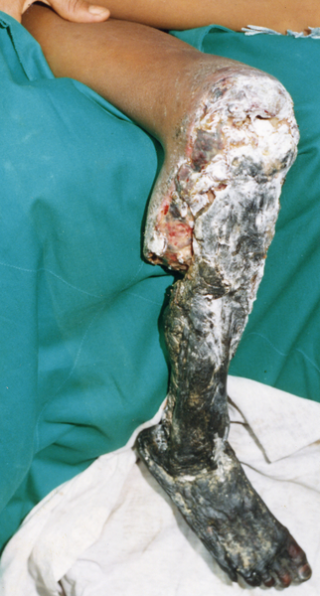
Here is a sadly famous image of the leg of a boy bitten by a Bothrops asper. 

Extensive Tissue Necrosis of the Lower Limb in an 11-Year-Old Boy Who Had Been Bitten Two Weeks Earlier by a B. asper in Ecuador

Only antibiotic treatment had been given, so tissue damage was extensive, requiring above-knee amputation. Such pathological alterations are caused by the direct action of locally acting toxins in the venom (mostly metalloproteinases and phospholipases A2), together with an indirect effect promoted by local inflammatory events and ischemia secondary to venom-induced vascular damage and increased intracompartmental pressure. (Image: D. A. Warrell)


ॐ लोकाः समस्ताः सुखिनो भवन्तु ॥
Om Lokah Samasthah Sukhino Bhavantu
May all beings everywhere be happy and peaceful.